Wooden Arch Bridge Construction
Introduction
Wooden arch bridge construction is a traditional architectural practice primarily found in Fujian and Zhejiang provinces along China's southeast coast. This ancient craft involves the use of wood, traditional tools, and intricate craftsmanship techniques, including beam-weaving and mortise-and-tenon joints, which allow the construction of durable and aesthetically pleasing bridges without the use of nails or rivets. These bridges have historically served as vital communication tools and gathering places for local communities, fostering cultural identity and social connections.
The construction of wooden arch bridges is deeply rooted in cultural heritage and has been passed down through generations. The knowledge and skills required for this craft are transmitted orally and through personal demonstration, often within families or through apprenticeship systems. The bridges are not only functional structures but also cultural spaces that encourage communication, understanding, and respect among people. Despite their significance, the tradition has faced challenges in recent years due to urbanization, timber scarcity, and limited construction space, threatening its survival.
In recognition of its cultural importance, the wooden arch bridge construction technique was listed as a national intangible cultural heritage in 2008 and inscribed on the UNESCO List of Intangible Cultural Heritage in Need of Urgent Safeguarding in 2009. Efforts to preserve and revive this craft have led to its inclusion in the Representative List of the Intangible Cultural Heritage of Humanity in 2024, marking a remarkable revival and ensuring its continued relevance in modern society.
Design and Engineering Principles
The design and engineering principles of wooden arch bridge construction are a testament to the ingenuity and craftsmanship of ancient Chinese architects. These bridges are constructed using a mortise-and-tenon structure, which involves interlocking wooden components without the use of nails or rivets. This technique not only ensures structural integrity but also allows the bridges to withstand environmental challenges such as mountain floods and heavy loads.
The core technologies of beam-weaving and mortise-and-tenon joints are central to the construction process. Beam-weaving involves the precise arrangement of wooden beams to create a stable and durable framework, while mortise-and-tenon joints provide secure connections between the wooden components. The design efficiently spreads the load across the structure, often eliminating the need for supporting pillars. This innovative approach reflects the harmonious coexistence between humans and nature, as the bridges are designed to respond to the needs of local communities while respecting the environment and managing natural resources.
Experienced woodworking masters play a crucial role in the construction process, directing teams of skilled artisans and ensuring that traditional techniques are faithfully applied. The blueprint for each bridge is meticulously calculated, with precise measurements and angles to guarantee stability and longevity. The construction sites are often located in challenging mountainous areas, requiring physical strength, endurance, and a deep understanding of structural mechanics.
Notable Wooden Arch Bridges
Several wooden arch bridges in Fujian and Zhejiang provinces stand as remarkable examples of this traditional craft. These bridges, often centuries old, showcase the skill and dedication of the artisans who built them. One such example is the Tongle Bridge, which was restored in 2004 by master craftsman Dong Zhiji and his apprentices. This restoration marked a significant milestone in the revival of the endangered craft.
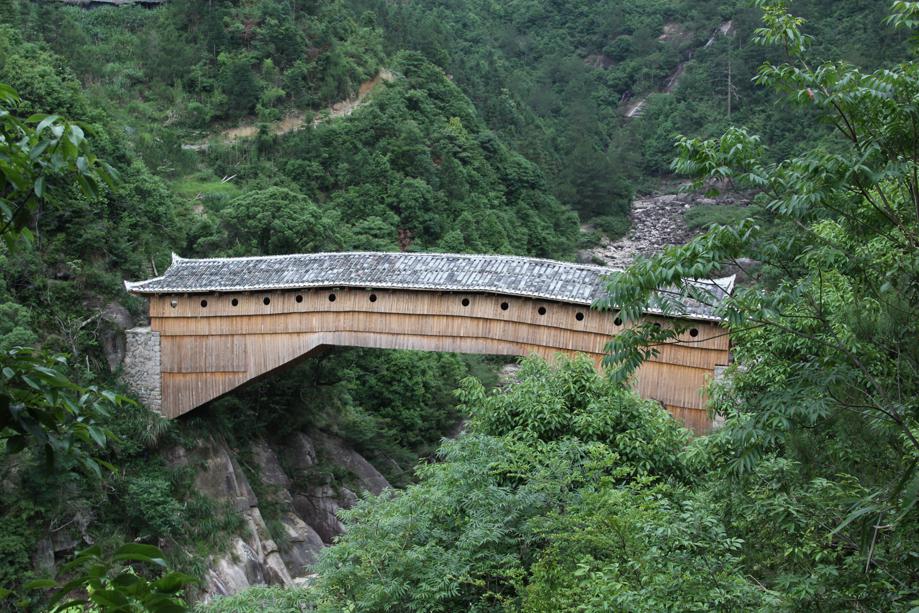
Ningde city in Fujian province is home to more than 50 wooden arcade bridges, some of which have stood for hundreds of years. One notable bridge in Ningde resembles a rainbow in outline and features a mortise-and-tenon structure built without nails or rivets. A roof protects the bridge from weathering by rain, ensuring its longevity.
Another notable creation is the Shuanglong Bridge, located in a geological park in Ningde. Spanning 66 meters over a river valley at a height of about 10 meters, this bridge exemplifies the precision and skill required in wooden arch bridge construction. The blueprint for the bridge was meticulously calculated to ensure symmetry and stability, highlighting the importance of personal experience and craftsmanship in mastering the skill.
Modern Applications
In recent years, the wooden arch bridge construction technique has been adapted to modern life, ensuring its continued relevance and integration into contemporary society. Efforts to preserve and revive the craft have led to the construction of new traditional-style arch bridges and the renovation of old ones. Local governments have implemented measures such as subsidies for constructing bridges using traditional skills, encouraging the use and spread of the craft.
The associated skills, knowledge, history, and culture of wooden arch bridge construction have been integrated into formal education as valuable resources for local cultural development. This has helped to spread awareness of the practice among youth while promoting local traditions and living heritage. Workshops and training programs have been established to cultivate new generations of artisans, ensuring the transmission of the craft to future generations.
Wooden arch bridges continue to serve as communication channels and cultural spaces, enhancing community harmony and cultural identity. They are also used in scenic spots and tourist destinations, showcasing their aesthetic appeal and cultural significance. The craft has even gained international recognition, with traditional Chinese bridges being built abroad and models being sent as gifts to introduce their design and knowledge to a global audience.
Preservation and Maintenance
The preservation and maintenance of wooden arch bridges are essential to ensuring their longevity and cultural significance. Protective efforts have been undertaken by heritage activists, local governments, and dedicated craftsmen to safeguard these structures from threats such as fire, flood, insects, and urban development. Teams of volunteers and monitoring devices have been established to identify and address potential risks, ensuring the continued existence of the bridges.
Restoration projects have played a crucial role in preserving wooden arch bridges. For example, after super typhoon Meranti almost washed away three old bridges in Taishun county in 2016, 90 percent of their wooden components were retrieved, and the bridges were restored by inheritors of the craft. These restoration efforts validate the importance of preserving and passing down traditional skills.
The cultivation of inheritors has been a key focus in preservation efforts. Workshops and training programs have been established to teach the craft to new generations, ensuring its transmission and survival. As a result, the number of skilled artisans has increased significantly, with more than 40 representative inheritors now recognized, compared to only four in 2009.
International collaboration and exchange have also contributed to the preservation of wooden arch bridges. Seminars and cultural exchanges with counterparts in other countries, such as the United States, have provided valuable insights and inspiration for protecting these structures. The global recognition of wooden arch bridge construction as an intangible cultural heritage further underscores its significance and the need for continued efforts to safeguard it.








